

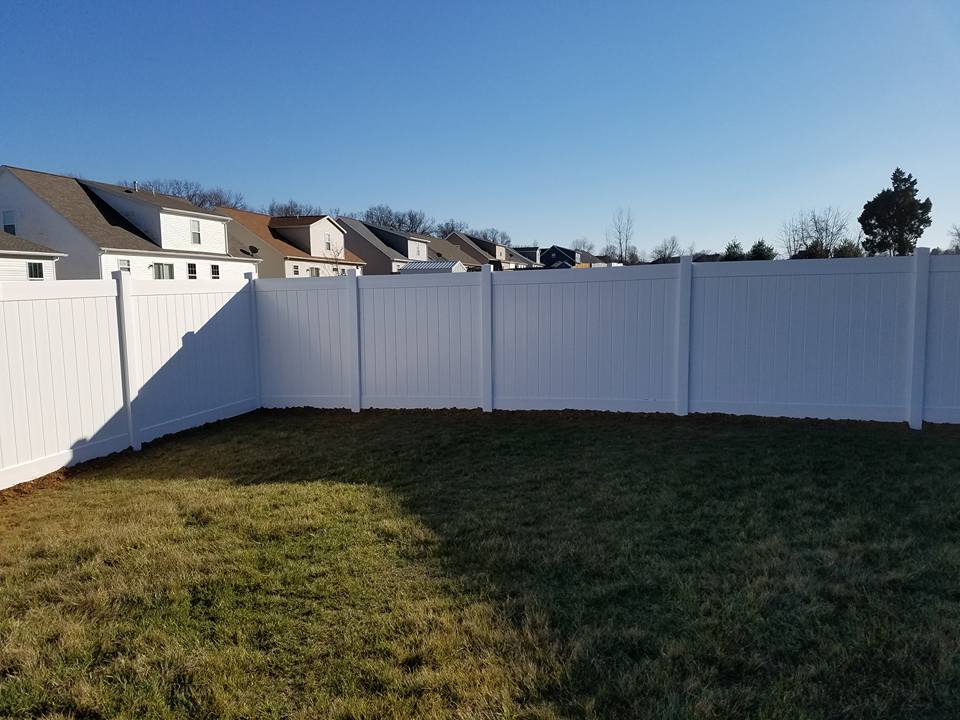
As a top-rated Indiana fencing contractor, we’ve seen so many fences fail due to oversights during installation and material defects. It’s not that every fence that fails was installed incorrectly, but many installation tactics aren’t up to the unique demands of a fence, which is where we take a different approach.
If you’re wondering what it takes to keep your fence in good condition, here are the five most common reasons fences fail and how to avoid them.
1. Shallow Post Placement
Fence posts are the foundation of the entire system. When they are not set deep enough or secured correctly, the fence is already at risk.
In Indiana, contractors have to consider frost depth from both a safety and regulatory standpoint. During winter, moisture in the soil freezes and expands, pushing posts upward. This process, called frost heave, can slowly lift posts out of alignment if they are not set below the frost line or properly anchored.
Common warning signs include:
- Posts leaning after winter
- Gates that no longer swing smoothly
- Fence sections that feel loose at ground level
A properly installed post should be deep enough to resist frost movement and set in a base that allows for drainage rather than trapping water.
How We Fix It: All of our fences are installed using the I Drive Power System, which reinforces your fence posts with steel beams to stop breaking and eliminate the greatest vulnerabilities. It’s so strong we back it with a lifetime warranty.
2. Trapped Moisture and Poor Drainage
Indiana soil often holds moisture, especially in clay-heavy areas. When fence posts are surrounded by concrete that does not allow water to drain, moisture can build up around the post base.
This leads to different problems depending on the material:
- Wood posts can rot below ground while looking fine above grade
- Steel posts can corrode faster than expected
- Vinyl posts can loosen as the surrounding soil shifts
Good drainage practices matter just as much as depth. Gravel bases, proper concrete shaping, and soil grading all help move water away from the post instead of locking it in place.
3. Wind Load on Solid Privacy Fences
Privacy fences take the full force of Indiana wind, especially in open areas or newer developments with fewer trees. Unlike ornamental or picket styles, solid panels act like sails.
If a fence was not designed with wind load in mind, problems show up fast:
- Panels crack or bow
- Rails pull away from posts
- Entire sections collapse during storms
This is especially common with 6-foot privacy fences that use undersized posts or too much spacing between posts. In high-wind areas, stronger posts, closer spacing, or reinforced rails make a big difference in long-term performance.
4. Wrong Material Choice
Not all fence materials handle Indiana’s climate the same way. Temperature swings, moisture, and UV exposure all play a role.
Some examples:
- Untreated or low-grade wood absorbs moisture and breaks down faster
- Vinyl without internal reinforcement can flex and weaken over time
- Lightweight metal fencing may not hold up to snow load or wind pressure
A fence can fail even if it was installed correctly if the material itself is not suited for local conditions. Choosing products designed for Midwest weather helps prevent early replacement.
5. Poor Maintenance
Sometimes, fences fail because property owners simply set them and forget them. While we know modern materials are built to last longer with less upkeep, you can’t get around the fact that every fence needs some level of care to stay in top condition.
Take wood, for example. This is, by far, the most common fence material that needs to be replaced early because owners didn’t stain their fence. Moisture build-up leads to rot, warping, bending, and twisting. Your fence breaks down sooner, and you pay more to replace it than you would to have it cared for.
Even low-maintenance fences need routine inspections to address common repairs, like loose gate hardware or damaged pickets. The good news is that the more proactive you are about fence maintenance, the more likely your fence is to last.
Check out our fence care guide for tips and tricks for every fence material.
Building the Right Fence From the Start
If there’s one choice more important than your fence material, it’s the contractor you have install it. Here at Mr. Fence, we pride ourselves on not just delivering the best, but being the best at our craft.
A fence built for Indiana weather is not just about looks. It is about structure, drainage, and choosing materials that can handle everything the seasons throw at them.
Get a fence built to last. Call Mr. Fence at (812) 425-3550 or visit our contact page to schedule a free consultation with a local pro.